

Blog
February 5, 2026
FAQ: Education After Mahmoud v. Taylor
This resource is intended to provide information and guidance to public school leaders and community members on the meaning and practical implications of the US Supreme Court’s Mahmoud v. Taylor decision. This resource was created for educational purposes only and is not legal advice. Please consult with an attorney regarding your school’s particular policies and practices.
Case Background
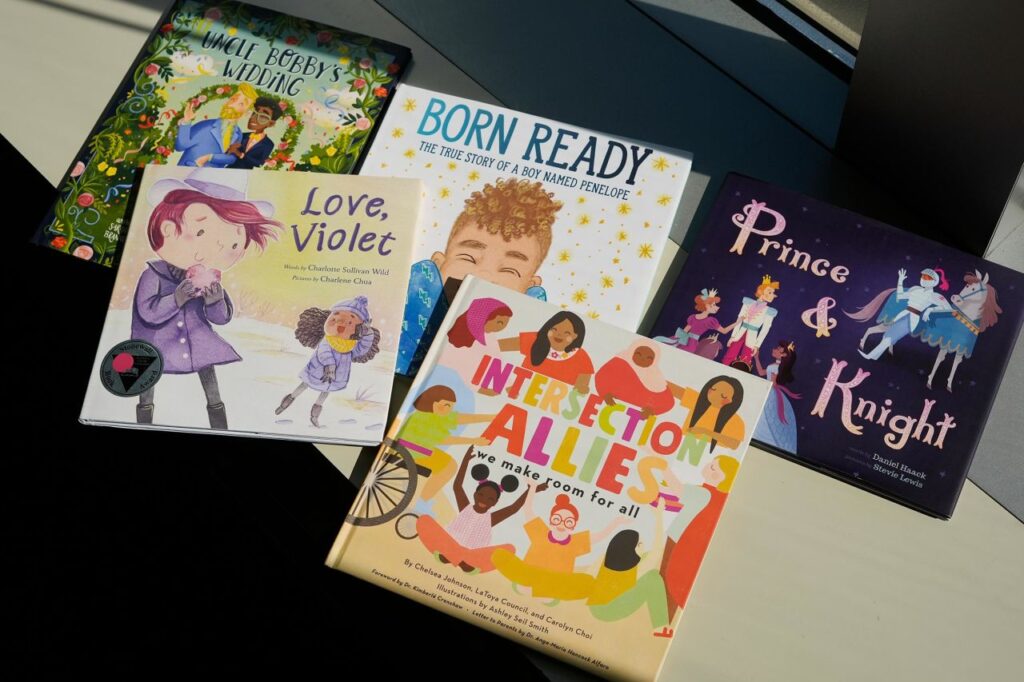
In Mahmoud v. Taylor, a group of parents from different religious backgrounds sued a Maryland school district after it stopped letting them opt their elementary school children out of certain classes. These classes used five storybooks that helped teach reading skills and included LGBTQ+ characters. The district ended its opt-out policy because the number of requests had become too hard to manage. The parents argued that taking away their ability to opt out violated their constitutional right to freely practice their religion.

In June 2025, the Supreme Court ruled in favor of the parents. The Court said the school district must give parents advance notice and the choice to excuse their children from any class using the storybooks in question for instruction. The Court found that the parents were likely to win their claim that denying the opt-out unfairly limited their right to practice their religion. It also said that, when school instruction “substantially interferes with the religious development” of children, the policy is unconstitutional unless the school can prove it serves a “compelling” government interest and is “narrowly tailored” to meet that goal.
The Court did not set a clear rule for how parents’ religious rights apply to public school instruction. Instead, it said that whether a lesson “substantially interferes” with a child’s religious development “will depend on the specific religious beliefs and practices asserted, as well as the specific nature of the educational requirement or curricular feature at issue.”
The Court also seemed especially concerned with the young age of the students, suggesting that this decision might not apply as broadly to older students. Because the ruling leaves many questions open, schools should consult their legal counsel when deciding how to handle specific cases involving opt-out requests in elementary school instruction.
Frequently Asked Questions
When are public schools required to provide religious opt-outs, and how should that process work?
Because of the court’s decision, public schools now must generally allow parents to excuse their children from classroom lessons that pose a “very real threat of undermining” their sincerely held religious beliefs and practices, or that significantly interfere with their children’s religious
development.
However, it’s important to note that the books in this case were used with kindergartners and elementary school students. The Court emphasized that such young children are especially impressionable and specifically stated that “[e]ducational requirements targeted toward very young children . . . may be analyzed differently from educational requirements for high school students.” This means that the need for opt-outs in middle or high school will likely be lower, since older students are less likely to have their religious development affected in ways that raise constitutional issues.
In Mahmoud, the Court also described the books – and the guidance teachers were given for using them – as “convey[ing] a particular viewpoint about same-sex marriage and gender.” In other words, the Court seemed to believe the books were promoting a specific opinion rather than simply sharing neutral information.
Schools that allow religious opt-outs should require parents to take clear, intentional steps to request them, such as submitting their religious objection in writing. School districts should train staff on how to manage these requests and make sure they are reviewed quickly. Staff should treat all opt-out requests with respect and sensitivity, even if the school ultimately denies them. Remarks that come across as disrespectful or hostile toward religion are unhelpful, can make conflicts worse, and might be used as evidence if a lawsuit occurs.
Finally, while the Court criticized the district for failing to notify and accommodate parents after they had voiced their objections, the decision does not require schools to notify all parents in advance about opt-out rights. However, if a school district decides to send notices or forms explaining these rights, it should do so carefully – without singling out or drawing unnecessary attention to LGBTQ+-related material.
Mahmoud focused only on the use of books for “instruction,” meaning materials that are part of the official curriculum. The decision does not require nor allow schools to censor or remove books from classroom or school library shelves, including LGBTQ+-inclusive books or any others that parents might object to for religious reasons.
What types of classroom activities does this decision impact?
The Court also made clear that this decision does not give parents control over what schools teach. It only gives them the right to “have their children opt out of a particular educational requirement.”
Finally, the decision does not affect students’ rights to express themselves at school, to discuss LGBTQ+-related topics, or to create LGBTQ+-themed student clubs just like any other extracurricular club. It also does not affect teachers’ rights to be themselves at school without fear of workplace discrimination based on their sexual orientation or gender identity.
Is the decision providing the right to religious opt-out accommodations in public schools only applicable to LGBTQ+-related content?
No. Although Mahmoud dealt with LGBTQ+-inclusive storybooks, the Court’s reasoning applies more broadly. School leaders should create general policies for religious opt-outs that aren’t focused only on LGBTQ+ content.
For convenience, should schools segregate LGBTQ+-related content and then just provide opt-outs for that unit?
No. Research shows that inclusive education not only improves students’ academic performance but also helps them develop empathy and stronger connections with one another. Separating this kind of information from the rest of the curriculum – such as lessons in history, reading, literature, or art – takes away the benefits of learning about classmates from different backgrounds and being part of a multicultural community.
Because schools must also be ready to respect parents’ religious beliefs about other kinds of classroom topics, focusing only on removing LGBTQ+ content could create bigger problems. It could start a slippery slope, leading to a complicated and confusing school curriculum that would make this court decision even harder to put into practice.
If you have questions or concerns, contact GLAD Law Answers for free, confidential legal information and referrals.
 Español de México
  Português
  简体中文
简体中文  香港中文
香港中文  Français
  Tiếng Việt
  العربية
  Polski
  Русский
  Deutsch
  Kreyòl Ayisyen